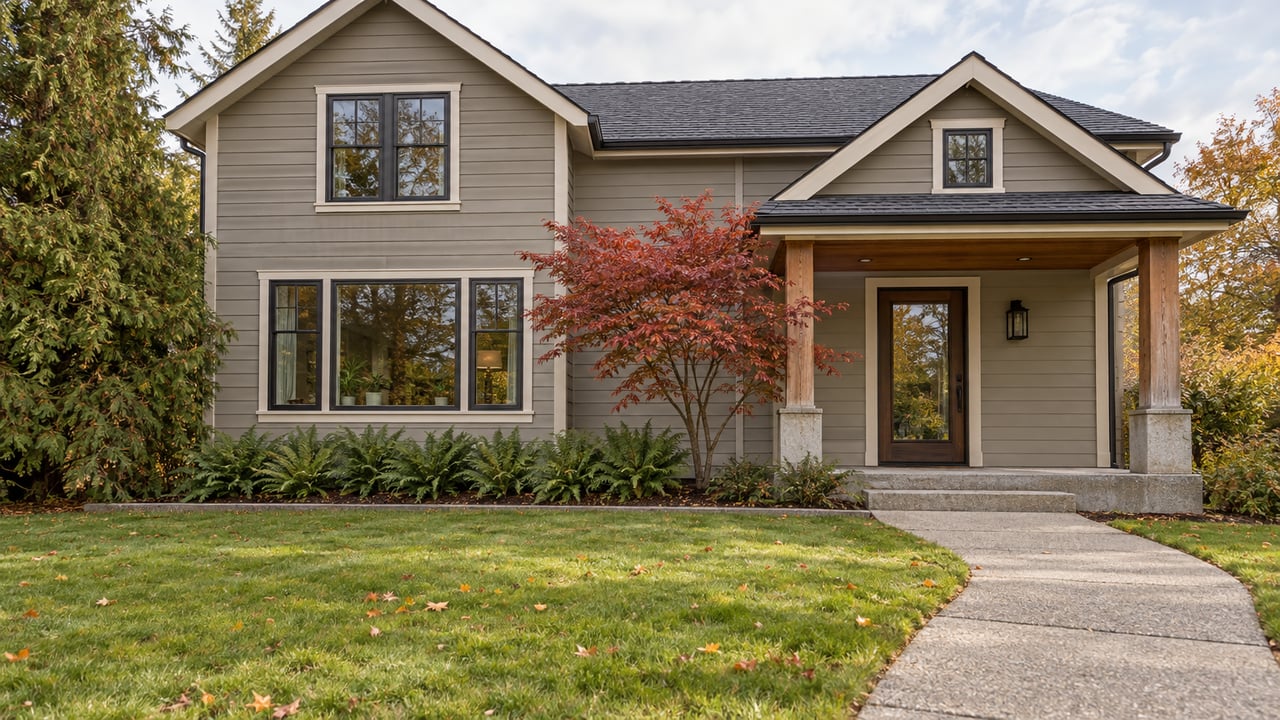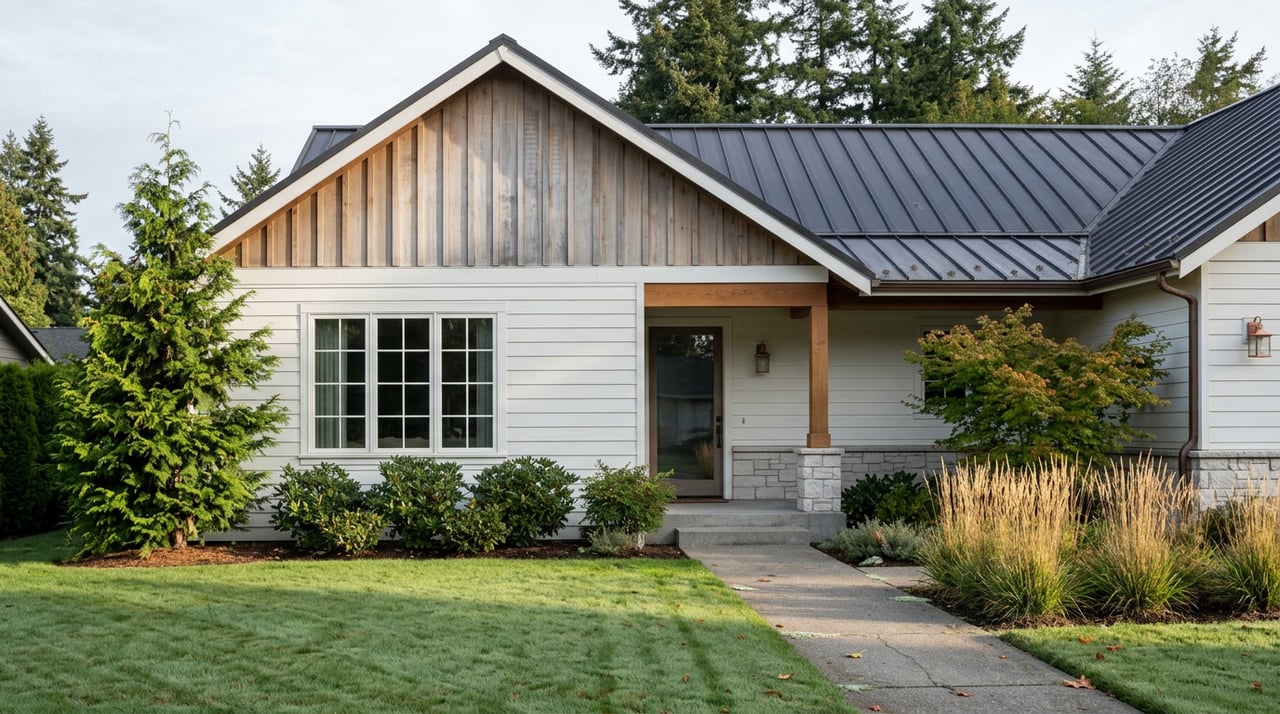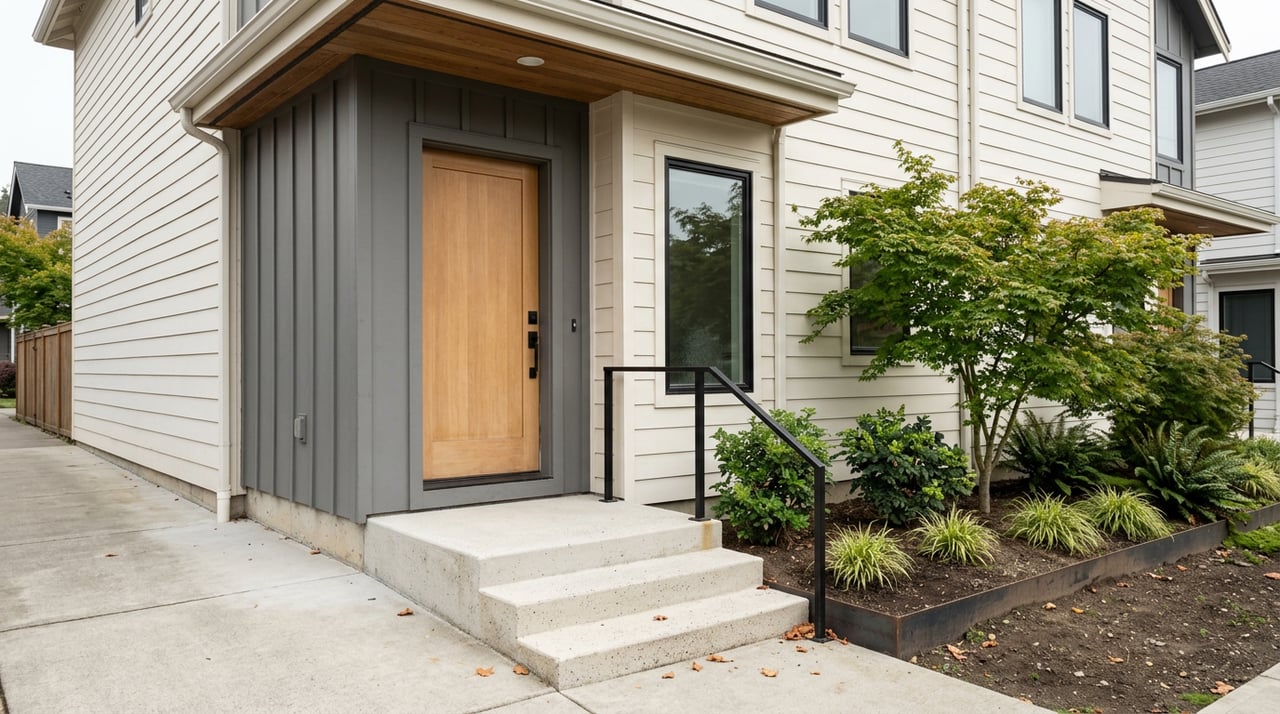
Picture a resale seller near the BelRed light rail station right now. Her three-bedroom townhome has been listed for three weeks with a couple of showings and no offers. Down the street, a brand-new Verdyn Townhomes unit from Intracorp goes under contract in a matter of days. Similar square footage, similar finishes, and her list price is actually the lower of the two.
The instinct is to cut price further. That's the wrong move, and the reason why says something about how this corridor is going to behave for the next year or two.
The Corridor Behind the Story
BelRed used to be car lots and warehouses wedged between a freeway and a single-family neighborhood. The city rezoned it back in 2009 to turn the roughly 900-acre former industrial strip into a series of transit-connected, mixed-use neighborhoods anchored to light rail stations. The BelRed station itself opened on April 27, 2024, an at-grade stop on NE 16th Street with a 300-stall park and ride next door. Wilburton and Spring District stations opened the same day, a few stops down the line.
The bigger shift landed this spring. On March 28, 2026, Sound Transit completed the 2 Line's crosslake connection, the first light rail service to run on a floating bridge anywhere in the country, linking Bellevue directly to Seattle without a transfer. That's not background noise for a corridor built around these stations. It's the moment the sales pitch for everything near BelRed got a lot easier to make, and builders know it.
More than 3,500 residential units have been built, are under construction, or are in permitting around the BelRed station area since 2017, according to reporting from The Urbanist's East Link transit-oriented development series. Two projects alone, at 1733 127th Ave NE and 12727 Northup Way, are planned for 171 townhomes across 31 buildings. That reporting also notes that BelRed four-bedroom townhomes have recently sold above $1.3 million, so this isn't an affordability play. It's a straight comparison between an older resale property and a new one, both priced in seven figures, competing for the same buyer.
Financing Incentives at Verdyn Townhomes
Here's what makes this corridor different from a generic new-construction-versus-resale story. The builder isn't cutting price. It's cutting the buyer's monthly payment, and it's been dialing that lever up and down for almost a year.
| Listing Snapshot | What Was Advertised | Approximate Timing |
|---|---|---|
| Verdyn Townhomes model home grand opening | Mortgage rates "starting at 1.875%," APR disclosed at 6.77% OAC | September 2025 |
| Verdyn Townhomes active unit | Seller-funded rate "starting at 3.75%" | Current listing, 2026 |
| Verdyn Townhomes end-unit listing | Seller-funded rate "starting at 3.50%" | Current listing, 2026 |
| Separate Verdyn presale unit | $20,000 buyer bonus | Current listing, 2026 |
| Separate Verdyn active unit | $30,000 buyer bonus | Current listing, 2026 |
Pulte Homes has its own project, called 88 Degrees, coming to the Spring District station area with the same new-construction townhome format. None of these builders have published a lower base price. What they've published is a changing set of financing offers.
If your resale listing near BelRed is sitting, the fix is rarely your list price. It's what the buyer's monthly payment looks like next to the new construction unit three blocks away.
How Builders Use Financing Incentives
Builders may use rate buydowns and cash bonuses instead of price cuts. A recorded sale at a lower price becomes the new comp for every remaining unit in that community. A rate buydown or a bonus doesn't show up in the county's sale price record the same way.
That pattern shows up clearly in citywide market reporting. New construction sales across Bellevue closed at a median price of $2.45 million in April 2026, moving with noticeably more negotiation and more patience than resale activity in the same month, and mostly closing under the original list price rather than the sticker itself. A separate monthly tracking report of NWMLS new-construction data from January 2026 described builder inventory as elevated relative to how quickly homes were going under contract, with builders holding list prices firm and leaning on incentives rather than outright reductions.
Resale sellers don't have that luxury of an abstracted comp. Every price change on a resale listing is a matter of public record the moment it closes. That asymmetry is the whole story.
What This Means If You're Listing Near the Corridor
Citywide, the resale market isn't soft. Bellevue's median sale price sat at $1.5 million over the three months ending in May 2026, with homes averaging around eight days on market and roughly two offers each. Sale-to-list ratios were running close to 99.6 percent as of March 2026, with about a quarter of transactions closing above asking, though that share had fallen from roughly 41 percent a year earlier. This is still a market that rewards a well-positioned listing.
The catch for anyone within walking distance of BelRed, Wilburton, or Spring District stations is that "well-positioned" now has to account for a builder's financing offer, not just a neighbor's recent sale. A buyer comparing your $1.3 million resale townhome to a new-construction unit at a similar price, but with a builder-funded rate two to three points below market, isn't evaluating square footage. They're evaluating a monthly payment, and the new-construction option often wins that specific comparison even when your home is priced lower on paper.
The Math a Price Cut Doesn't Solve
Say a resale seller drops price by $40,000 to try to compete. On a loan that size, that trims the monthly payment by a modest amount, generally in the range of a couple hundred dollars, depending on rate and terms. A builder-funded buydown that takes a buyer's rate from market level down toward 3.5 to 3.75 percent, even temporarily, can move the monthly payment by several times that amount in the early years of the loan.
This isn't a lending recommendation. It's an illustration of why a straight price cut usually loses to a financing incentive when both are competing for the same buyer's monthly budget. A seller who understands that math has more options than one who only understands price.
A Short Playbook for Sellers Weighing This Corridor
- Get a real buydown quote before you touch your price. Ask your lender what a 2-1 temporary buydown or a permanent rate reduction would cost as a seller credit on your specific price point. Compare that dollar figure to what an equivalent price cut would actually do to a buyer's payment.
- Offer the concession, not just the credit line item. Buyers respond to "your rate could look like this" more than they respond to "here's $15,000 toward closing costs," even when the dollar amounts are close.
- Price to the days-on-market reality, not the list price reality. With citywide resale averaging around eight days in favorable price bands, a listing that's been active for three weeks near a station corridor is already signaling something to buyers' agents, regardless of what the price says.
- Know what's still in the pipeline. With more than 3,500 units built or in the pipeline around BelRed alone, and additional projects like 88 Degrees still to come, this isn't a one-quarter phenomenon. Plan your listing strategy assuming builder incentives will keep shifting for at least another cycle or two.
- Lean on your own marketing where the builder can't compete. New construction can't sell a mature lot, an established garden, or years of accumulated curb appeal the way a resale listing with genuine character and professional photography can.
FAQ
Does a builder's rate buydown lower my home's appraised value? Not directly. Appraisers generally look at closed sale prices, not financing terms, when pulling comps. The concern for resale sellers is buyer behavior and pricing pressure, not appraisal math.
Is this only happening in BelRed, or across Bellevue? The financing-incentive pattern is showing up in new construction communities citywide, but it's most visible in station-adjacent corridors like BelRed and Spring District, where new supply and resale inventory sit close enough together for buyers to cross-shop directly.
Should I just match the builder's advertised rate? Match the effect, not necessarily the number. A seller-funded credit structured as a temporary buydown for your buyer's specific loan often accomplishes more than trying to replicate a builder's exact advertised rate, which may depend on their in-house lender relationship.
If you're weighing a listing near BelRed, Wilburton, or Spring District, the pricing conversation has more moving parts than it did even a year ago. Pacific Northwest Partners tracks these station-corridor shifts as they happen and can walk through what a competitive financing offer would look like for your specific listing. Request a complimentary home valuation or schedule a consultation before you assume the fix is your price.
This article is general information, not legal, tax or financial advice. Consult a qualified professional about your situation.